
FULL MOON WEREWOLF
or the emotional tug of misinformation

So there’s this video circulating on the Internet about a game called “Werewolf”. I played this game several times, with various groups of people, and I did not know what it meant or why it was designed until a few months ago. It blew my mind.
The game, which is simple and hilarious to play around a table with a glass of wine in your hands, both outdoors and indoors, was invented by Russian psychology student Dimitry Davidoff in 1986 to express and test out a theory: that a minority of informed people win an information war over an uninformed majority.
The strange thing about the game is that in theory - or rather, according to game theory (applied maths) - the werewolves should win most rounds. This is the main reason this game gets brought up in conversations as an argument about politics or the sway of the few over the many (see also: the USA and what’s currently afoot there.) Yet this is not the case in practice. When the game is played out, statistics are thrown out of the window. In fact, more often than not, it’s the minority that wins. There are many theories around why this happens, from more « esoteric » ones like sixth sense and intuition, to more sociologically complex ones. More about it here.
It boggles thinkers as to why this only works in theory.
Today I am putting forward my own take. I’ve been lucky enough to be around a table several times with different great storytellers narrating the Werewolf game and I can tell you - it’s what makes or breaks the game. It’s what gives each game a different flavour. The mediation aspect is very important in the game. The voice and perspective of the person presenting the information are just as important as the informed/ uninformed parties which the wolves and villagers represent. An actor will tell it so differently than a writer or a musician will. I know this because I've lived this. Some will make it scary, like a gore film. Others will make it so funny or sensual. The narrator is supposed to be neutral, but this only happens in theory. In fact, I propose we resist the urge of separating the gamers into two factions and admit a 3rd here, the narrator, in a class of its own. At any point in time, the narrator could choose to out the murderers. He wouldn’t even have to name them. They could choose to describe what they see and let people draw their own conclusions. They could allude, connote, constrain, punish, belittle, omit, uplift, create detours, double entendres, use their tone to add suspicion while telling only the score with words. Such is the power of the narrator.
I believe that the village people win when the narrator identifies with the townsfolk, and not with the wolves.
As the world is becoming more and more confusing and polarised and as misinformation seeps into our daily lives, we'll be hearing more and more about the few, who hold power over the networks of information, and the many, who are you and I, and everyone else who was not on stage in the White House on the 21st of January. You will be told this and that, it will get tiring, and I'm fully aware that I am adding to this distress, but I think it's important to remember that, like in the Werewolf game, their chances of winning are as good as anybody's. It's only statistically that they have the upper hand.
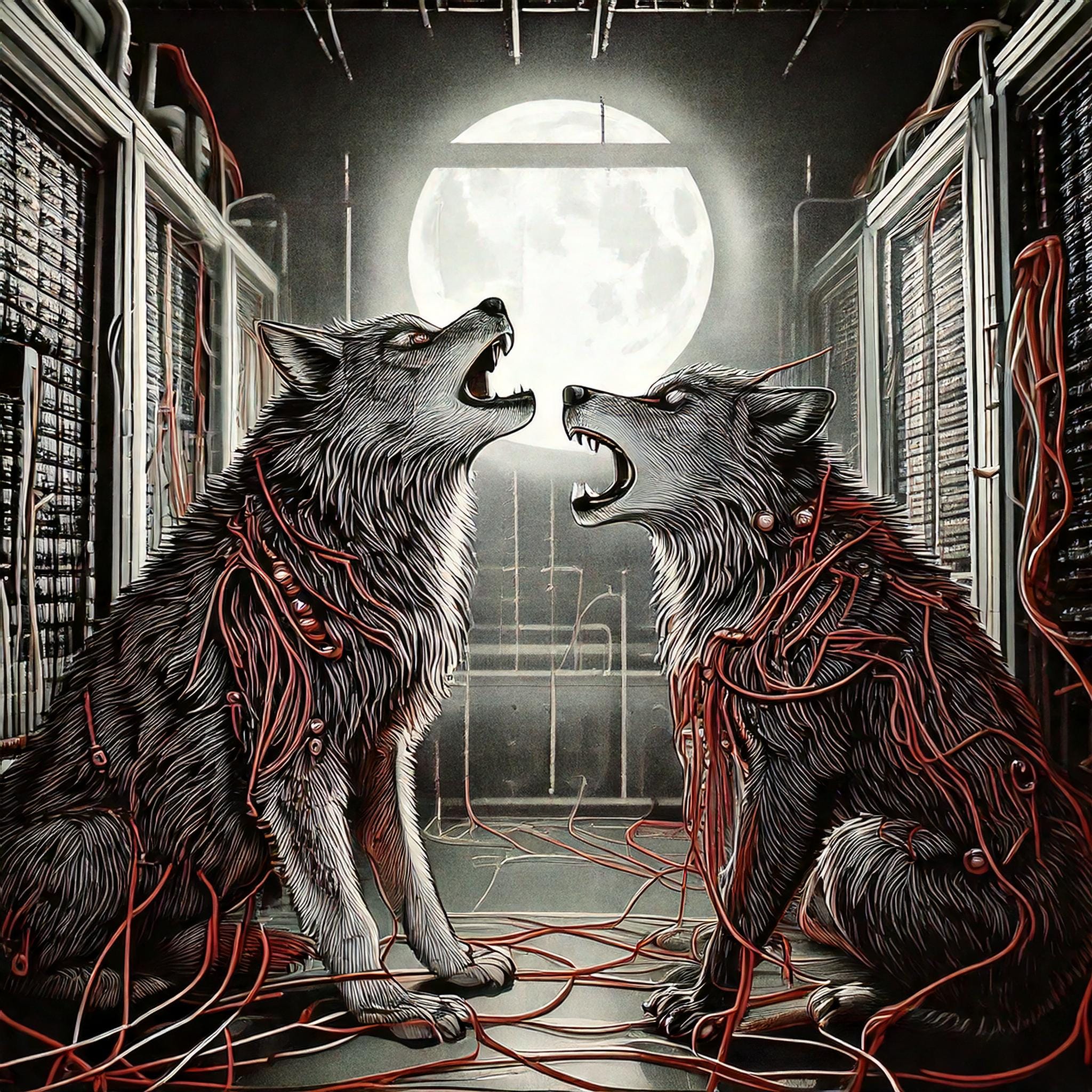
Speaking of wolves, another great reminder (and maybe an inspiration for the game) is the fable of The Boy Who Cried Wolf. You’ve heard it - it’s a sort of re-telling of Kassandra’s myth, this time in the skin of a shepherd boy who fucks around and finds out that if you trigger people’s panic button too many times, eventually people will dismiss you as a liar and let you die when the real wolves actually come attack the flock. This can be looked at as a lesson in the virtue of honesty, yes, but the darker side of it - to me - is this strategically and psychologically proven advantage of showering people with fake news. The people eventually become de-sensitised. We’ve seen it. We all knew people were dying in Gaza, but after like 6 months we clicked skip/ hide on that ad asking us for financial support, because - who knows what is true and how can we help those people anyway, right?
We must fight the urge to become complacent because it’s all too much and the information untrustworthy. That’s how they get us.
The other thing is that we need to become hyper-critical and laser-sharp about who it is that is doing the narrating of events. Who is paying them? Who do they silence and why? The medium IS the message. How the story gets told and who gets to tell it are very important. We cannot allow biased social networks to decide for us which kinds of news are worthy of notice, which kinds of voices or bodies are worthy of being seen and heard. Learn to shop around for information. Teach your parents to double check their sources whenever they deliver outrageous information. And I think that now, more than ever, we need people to narrate, with voice and with feeling, what is going on. And not only online, but in real life, to everyone who is willing to listen. We don't all have to be experts and we don't all have to be informed to the T. The personal is political and I suspect this is the only way through.
Let us heed the lessons of the games we play and the stories we tell, because storytelling is also a practice of survival. Maybe, for once, it’s a good time to listen to the ones who cry “Wolf”.
That’s very well put. I found that part about skipping the posts about financial aid to be triggering because there’s so many out there right now and it’s getting harder to figure out which ones to trust because there’s so much manipulation going round. I will also say that I remember from the presidential elections how so many pieces of news were going round about the Manchurian candidate and how some people were posting non stop because they were paniked themselves and were hoping that the they could spread the message to more people but the wrong message got spread because a lot of people saw this kind of action as desperate and annoying and they sided with the enemy out of spite or sheer stupidity. That’s a different form of crying wolf that we have. It’s not enough to check the story and try to tell it to people, we have to be careful how we package it because some might just say ‘yeah, but the other guy says different and he doesn’t sound desperate’